
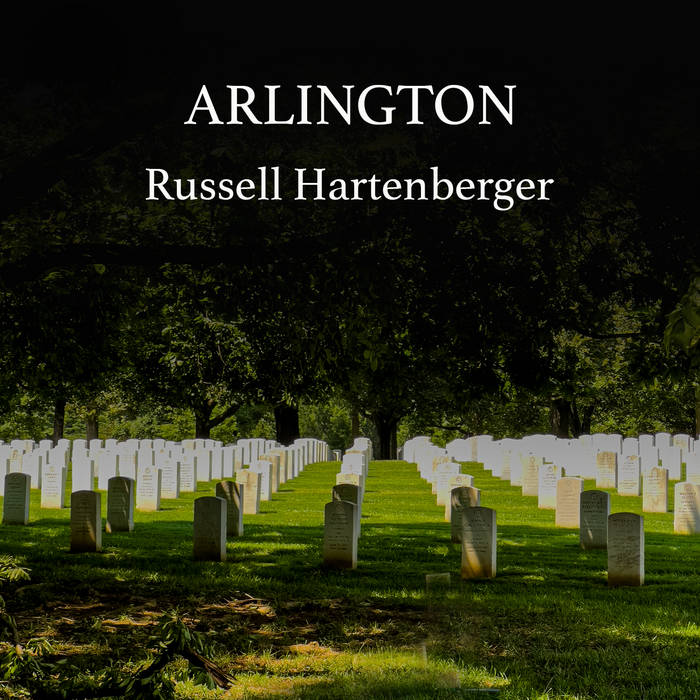
Russell Hartenberger, who was my music teacher, is a giant of contemporary percussion. For over fifty years he’s performed with the Nexus ensemble and composer Steve Reich, authored definitive books about percussion practice and rhythm, and taught generations of musicians. He’s also a composer of subtle chamber music that synthesizes the shared through lines of many different music cultures. “Arlington”, scored for solo snare drums (without buzzing snares) and percussion accompaniment, combines drum beatings based on rhythms from North American rudimental drumming (including beating patterns played at Arlington National Cemetery funerals), First Nations drumming, and West African timeline patterns. In this three movement piece, which has a 12-pulse meter, the solo snare drumming and the piano, marimba, vibraphone, and bass drum accompaniment parts share the shifting foreground and background of our attention, raising the question: Who is accompanying who? The drumming, dexterously performed by Ryan Scott, is precise and dynamically varied, building phrases from waves of syncopated and polyrhythmic single, double, and buzz stroke rolls. The snare drum is a hard-attack instrument with a military heritage (and a history that dates to the Medieval tabor marching drum), yet here its dark and muffled sound feels subdued and intimate, enhanced by the recording’s lack of reverb. The accompanying percussion frames the snare drum phrases with interlocking harmonies that convey both hope and melancholy. While the chords vary themselves and the textures rise and fall in density, in Hartenberger’s music there’s a sense of restraint in how a composition paces itself and evolves, and also a spirit of celebrating percussion’s extreme dynamic range–specifically the magic at the quiet end of volume’s spectrum. As I re-listened to “Arlington” I also noticed its ritualistic quality that evokes a drum solo in Indian classical music, in which a tabla drummer unfolds long rhythmic structures over a repeating lahara melody. Such solos are virtuosic, measured, and revelatory: great drumming can go far out, but always connects to a time cycle. “Arlington” is a story that brings one into a way of listening through the percussionist’s ways of hands, showing the harmonic implications and emotional resonances of snare drumming’s phrasings. As Hartenberger observes in the liner notes, “rhythms suggest melodies.”

 brettworks
Leave a comment