
“Not only do listeners not want music to become undifferentiated ooze, but no other part of the music economy wants it, either. Artists don’t want to have to make music that can’t be told apart, labels have no way to manipulate an attention economy around noises that resist attention, and streaming services can’t convince you to pay more for more-complicated subscription bundles if the ‘bundle’ is a more of a bucket of lukewarm jazz.”
“Music is one of our strangest forms of awe.””
“If you look at the global top 50 today and don’t recognize any of it, congratulations on your intransigence, but now go listen to it as if it’s your only advance knowledge of a planet you’re about to land on in a ship almost out of fuel.”
“If I had to rebuild the user-interface for a streaming service from scratch, quickly, but somehow with the benefit of all the pre-existing data, I would start with search, popularity and similarity. Search jumps you into hyperspace, popularity organizes the most likely places to land, and similarity lets you wander around looking at what’s there. Similarity doesn’t always explain why two things are related, but as a way of listening, juxtaposition is sometimes more effective than explanation, and always more scalable. With just those three algorithms we could make a world of navigable wonders, full of unimaginably great songs you could never have found on your own.”
“If you want surprising music that follows the same cultural template of surprise as punk, then the obvious thing to realize is that computers are the new guitars. Also the new bass and the new drums. Punk didn’t take laborious instrumental technique, but Sid Vicious notwithstanding, it generally took some instrumental technique. The Ramones wrote down to their playing level, but that playing level was well above zero. GarageBand and FL Studio remove this lower bound.”
[On the author’s genre map at https://everynoise.com]
“The Y axis (top to bottom) is based on an attribute called ‘mechanism’, which measures a combination of electronic vs acoustic instrumentation, and rigorously mechanical vs flowingly organic timing. Thus the genres at the very top are all variations of EDM, full of synthesizers and sequencer rhythms. Stomp stomp stomp whoosh: if you measured the times between beats, they’d be the same to the microsecond. At the very bottom are the least mechanistic, most organic genres, like harp and classical piano, made out of resonant acoustic instruments played with expressive human timing instead of mathematical precision. The X axis (left to right) is another attribute called ‘bounciness’, which measures the sonic density of the music. The left edge is genres where the noises are solid and constant: roaring Satanic metal, but also calmly steady drones or classical organs. The right edge is genres where the music is spiky, with space between the sounds: beat-driven dance music and hip hop and reggae, but also political speeches or people reading poetry aloud, where the sounds aren’t beats, exactly, but the spaces are still spaces.”
“There are too many songs for you to hear them all, even if it made any sense to hear them at once. You can take this as a delightful challenge, or you can let it free you. You can plunge into the infinite, or you can float weightlessly on the surface of it. It remains infinite either way, the noises unending,”
“‘Musicians are not compensated adequately for their labor’, the aspiring unionists warn, ‘there will be no more music.’ Every actual evidence suggests the exact opposite: that music is not an economy, that it’s not the product of scarce and reluctant labor, but rather the manifestation of helplessly abundant joy.”
“We can form ourselves into chords, but only if we sing out loud.”
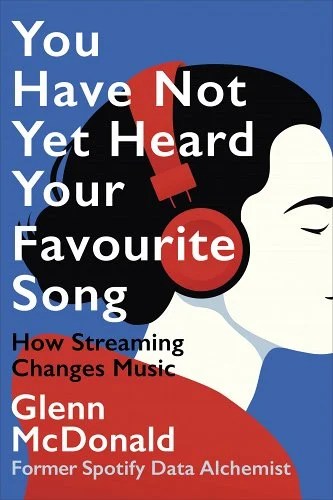
Glenn McDonald, You Have Not Yet Heard Your Favourite Song:
How Streaming Changes Music (2024)


 brettworks
Leave a comment