
(Image: Jason Hise)
In music production, a mixing console’s Send and Return system allows for sending an amount of a track’s audio to a separate Return track on which one can apply effects, such as reverb. This effects-processed sound is then returned to the original track and blended with it using the track’s Send control knob. Return tracks allow a single effect to treat numerous tracks simultaneously, perhaps in different amounts. For example, if you have a cathedral reverb on the Return, various instruments on different tracks can each get a little or a lot of the reverb. Situating each instrument in the same acoustic space adds cohesiveness to a mix.
In writing, a footnote is a kind of literary send and return system–a short piece of text placed at the bottom of a page that cites a source mentioned in the main text or provides additional information. The footnote enhances ideas in the article or book without interrupting its flow. Like a Return track sending a reverb to multiple destinations in a musical project, a single footnote can connect to multiple quotes in a text, situating them in the same conceptual space.
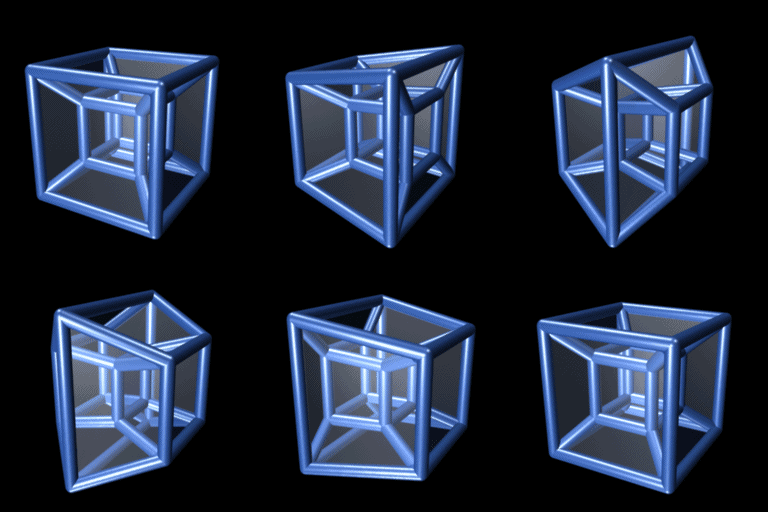
Going one step deeper, Send-Returns and footnotes are kinds of scaffoldings for creative work. A musically simple composition can become sonically complex with just a few Return channels whose effects (or chain of effects!) process the composition’s sounds. So too with a straightforward essay whose theoretical, historical, and social depths are revealed through footnotes that connect to ideas from other times, places, and disciplines. In sum, Send-Returns and footnotes build depth of field and situate recordings and texts in four dimensions.

 brettworks
Leave a comment