
“It turns out that minimizing surprise is equivalent to minimizing entropy, which in turn is equivalent to minimizing another mathematical quantity (borrowed from physics) called free energy. In this way, the goal of minimizing surprise explains both perception and action. We act […] in order to ensure that our predictions become self-fulfilling prophecies” (58).
“The Wundt Curve is invoked to explain why we like art and music that’s complex but not too complex, why video games are most engaging if they deliver an ‘optimal challenge’ that’s neither too easy nor too hard, and why flow states require a task that’s just within your capabilities” (66).
“If you’re feeling happy and curious, it might be better to seize the moment to do some brainstorming for a new project, and save your expense reports for another time when you’re less enthusiastic but more focused” (71).
“If you want to try something new, that inescapably means not doing the things that have already proven to work. This, in a nutshell, is what scientists who study decision-making refer to as the explore-exploit
dilemma” (76).
“We don’t just explore less as we age; rather, we seem to converge on an increasingly optimal mix of exploring, generalizing, and exploiting” (118).
“Coming up with new ideas is a more abstract concept than discovering a new continent, but the underlying processes of physical and conceptual exploration have more in common than you might think. ‘There’s a lot of evidence that the same neural machinery we use for exploring the physical world around us is also leveraged to explore more abstract concepts,’ says Charley Wu” (151).
“Quantum computing’s origin story is a perfect illustration of a common source of new ideas: the intersection of two old ones” (153).
“Jürgen Schmidhuber, a giant in the field of artificial intelligence, has a wide-ranging ‘Formal Theory of Creativity, Fun, and Intrinsic Motivation’ that defines fun as, in essence, a signal of how quickly you’re improving your model of the world” (159).
“Do you have the freedom to follow your nose, to shape your experience by
choosing to pursue the paths—literal or intellectual—that interest you the most? Or are you just swallowing whatever you’ve been spoon-fed? By that metric, the problem with social media isn’t just that we spend so much time sedentary and taring at a screen—it’s that we surrender too much autonomy to the algorithms that choose which content to serve us” (177).
“The problem […] was broader than GPS. She saw a societal shift toward instant gratification, efficiency at all costs, productivity as the only measure of value—all of which favor passive stimulus-response-driven
thinking rather than slower, more effortful cognitive mapping. And a smaller hippocampus, she warned, raises your risk of various maladies, including Alzheimer’s disease, depression, schizophrenia, and post-traumatic stress disorder” (183).
“This link between playing and exploring— between slope-building and slope-chasing—has important implications. It suggests that the most
productive exploring is also the most fun, fun being the intrinsic neural signal that we’re maximizing our learning rate. It also suggests that the decline of play, both within our lifespans as we become curmudgeonly adults and across generations as we tether our children to low-risk activities and high-tech screens, has serious consequences” (189).
“Problem-solving skills are important, but so are problem-finding skills” (200).
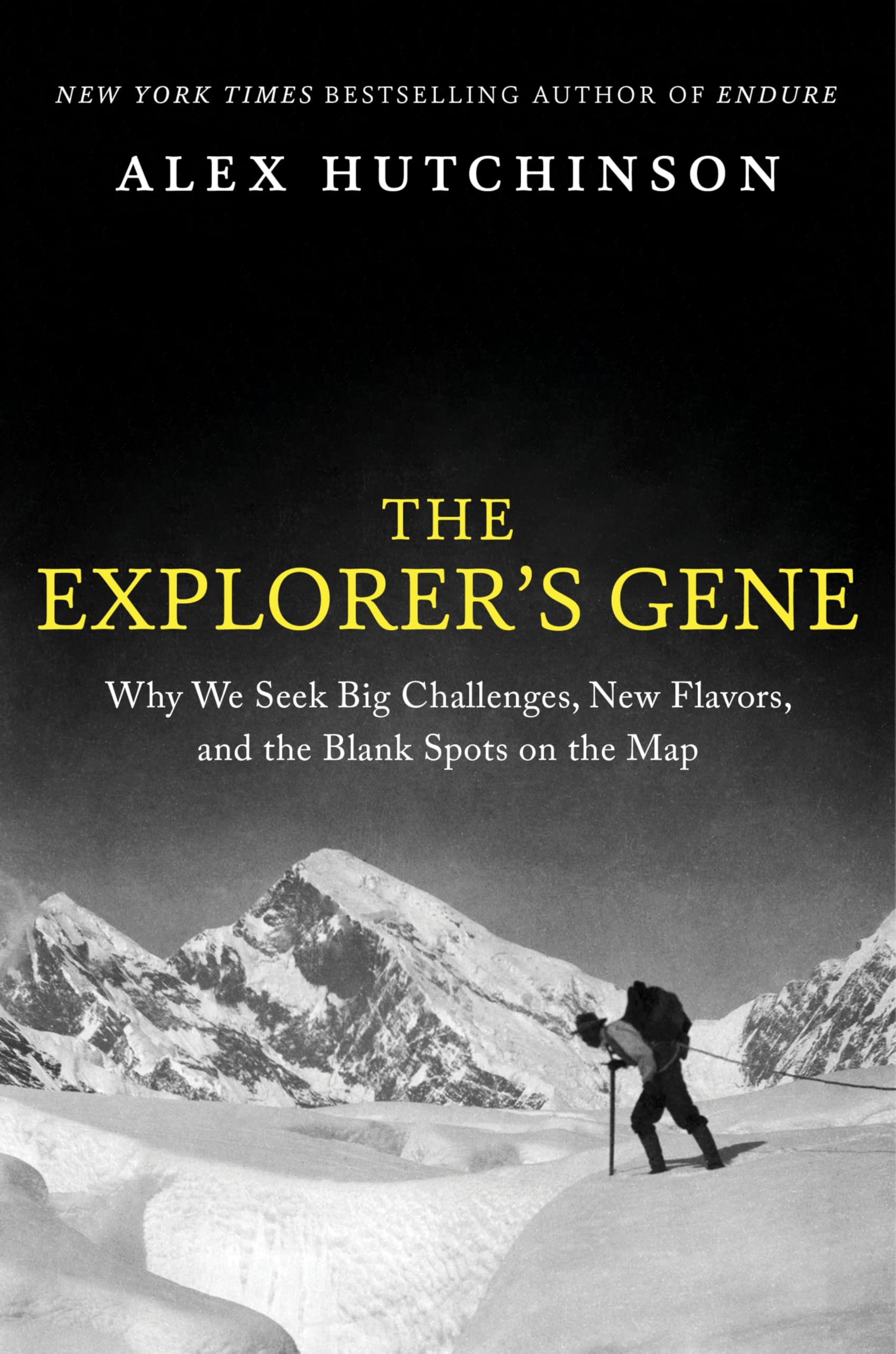
Alex Hutchinson, The Explorer’s Gene (2025)

 brettworks
Leave a comment