
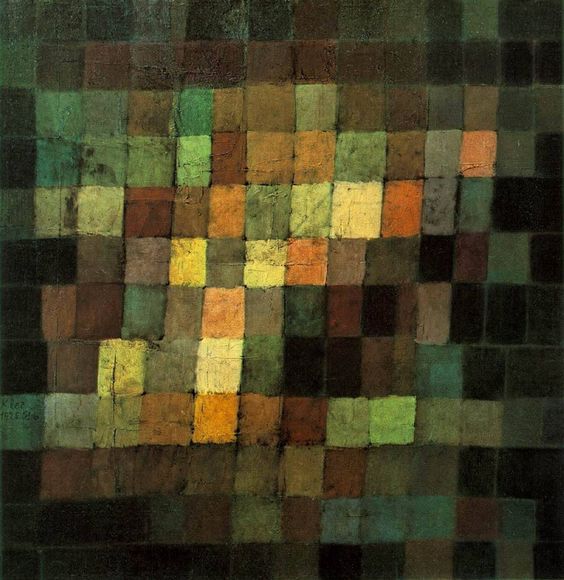
Paul Klee, Ancient Sound (1925)
Music is all energy. From its oscillating sound waves to its emotional effects on listeners, music encapsulates and compresses energy and then unleashes it back into the world. The orchestra, the choir, the DJ, the percussionist–musicians are energy artisans who use sound to build fleeting structures of feeling.
Composing, a species of musicianship, requires a lot of energy. This energy is different from that of the performer who–and I say this as someone who performs all the time–executes rehearsed moves and puts on a show for an audience. The composer’s energy is more inner-directed in that it circles around discovery’s gifts. But for both the performer and the composer, an energized calm is one’s ideal state of body-mind.
Calm isn’t complacency, though. If the performer relies on the same rehearsed moves, or the composer re-hashes the same chord gestures, artistry vanishes and creative energy dissipates. On a fundamental level then, every artist works to overcome the inertia of personal and collective complacency by spiritedly exploring the tools, techniques, and influences of their domain. For composers, “the conditions of possibility” for the musical are set up through deep listening, or listening as “an active form of creating.” Within this space of attention, composing unfolds through exploring, learning how sounds get along, curating serendipities, improvising, and organizing all of this, somehow, into a presence. In sum, the energy of composing is spent trying to make something beautiful happen.

 brettworks
Leave a comment