
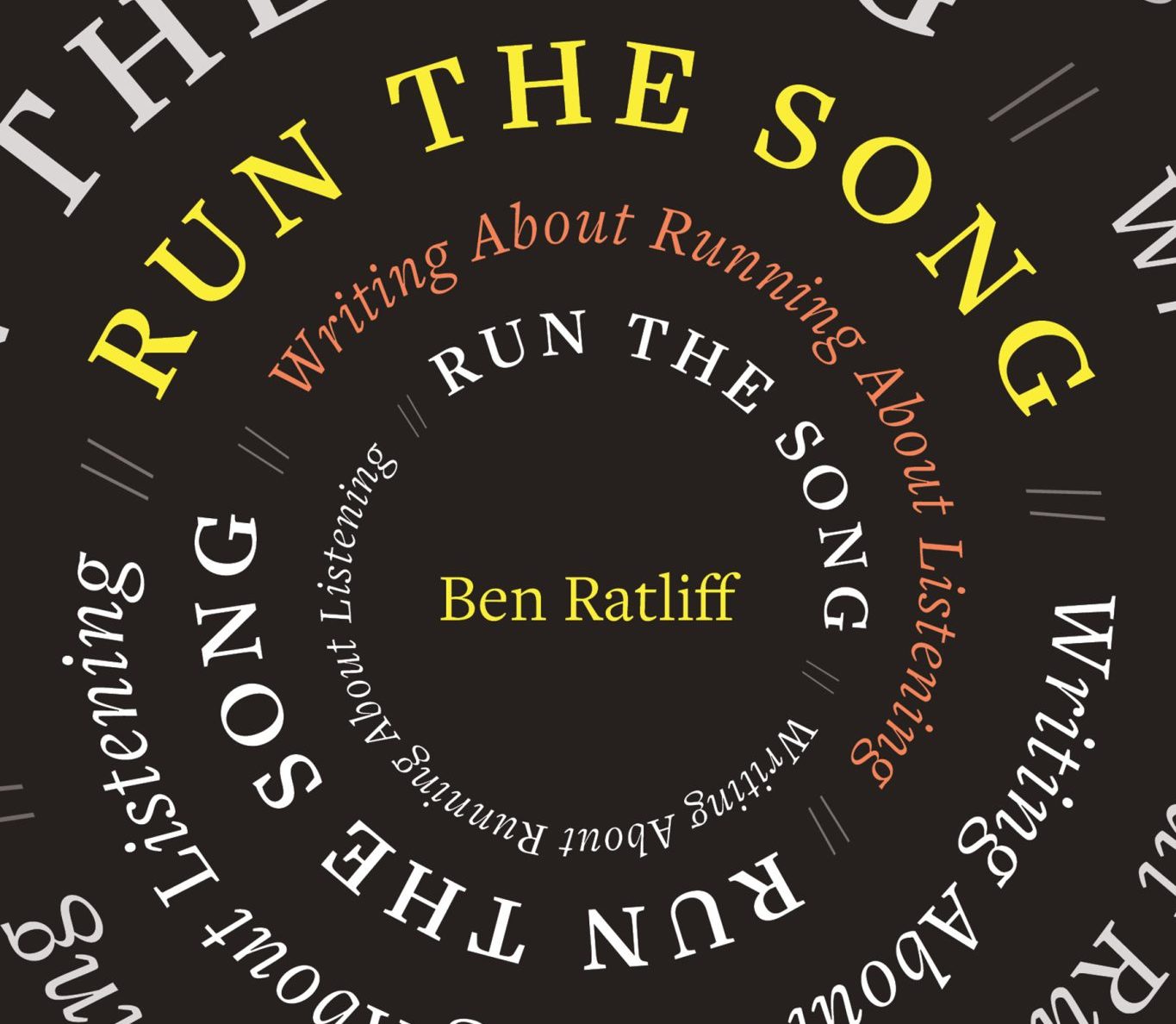
“It occurred to me that there was a connection between the act of listening and the act of running, and I began to write from that point of connection” (24).
“I am talking about running the song: a way to engage with the music’s forward patterns, its implications, its potential, its intention, and even its desire” (26).
“Criticism is discernment about an arrangement, but neither the discernment nor the arrangement need be fixed. Running-while-listening creates the conditions for a kind of unforced criticism on the move” (27).
“He comes up with an improvised phrase, never a very complicated one, and repeats it through a cycle of chords until the refusal to enlarge or modify it stretches credulity. To use ‘looking’ terms again: it is as if he picks up something that is not exactly simple but is limited, of very finite and understandable parts—a baseball, let’s say—and really, really looks at it. The act of looking is his solo” (38).
“But he doesn’t seek to improve it or make something grander of it. He seldom uses a well-established musical move from the world outside his relationship to the phrase to make things cute; he doesn’t use emotional clichés. He simply keeps working on his own rough and bumpy analysis, with no obvious payoff in sight, by which I mean in anticipated hearing” (38).
“Perhaps they don’t want to get to know the music too well, or so well that it becomes a closed system with a fixed value, something that becomes trapped, or that could trap them” (52).
“After a while, the only thing that many writers wish for is the ability to change their own perception. This takes more than input or learning. You can talk to hundreds of people, read hundreds of books, do a lot of preparation, and still be stuck with more or less the same perception, the same limited set of ideas. This sort of perceptual change is an abstract wish and an abstract achievement—it’s all in the brain. By changing my perception physically, I thought I might help the process” (56).
“It may not be clear at first what the essay is about, and that is because it is not about a thing or a stable idea but the real-time sensation of expanding one’s perception” (56).
“Within a minute of listening to the record you feel you are hearing a life’s work basically compressed within each phrase, and expressed through a medium of very limited output” (63).
“A master lives in emptiness while working in form” [re: shakuhachi player, Hisamatsu Fuyo] (64).
“the Japanese musician Seigen Ono’s theory that the booming, gated-reverb drum sound of mid-1980s pop had to originate in Europe and not Japan, because it mimics an echo off stone structures. (Whereas Europeans had centuries of experience of hearing sounds reflected off stone houses along both sides of roads leading in and out of their villages, Ono explains, Japanese villages had no stone structures; Japan was a ‘paper-and-wood culture.’)” (71).
“the music is changing me, and I am changing it: I am creating conditions for it, and a context for it, that its makers hadn’t anticipated” (91).
“His playing accepts motion as an idea in itself” (97).
“Whenever ‘boring’ runs hot through intent or repetition, it becomes valuable” (98).
“Here is the writer I propose: a music critic who has become less and less interested in what the former standard modes of music criticism look like” (101).
“The critic’s task is to clarify. Clarify what, though?” (101).
“The best writing about any art—and the best art too—is generally the kind that stretches toward the limits of its capabilities, and that points, at least, toward what a writer or an artist can’t quite express” (102).
“Running is often like a performance—you are imposing upon public spaces, moving through environments as if they were sections of a concert or a dance, flinging yourself on and through the world. Running is noncompetitive, soloistic, self-directed, quiet, and yet in a way it can represent the opposite of keeping to yourself” (108).
“anyone who sets up a shop or puts out records has learned to finish things. The track or the table is simply the outcome, not a method or the reason it was made” (146).
“an effective sound mix is one in which different elements of sound convey the impression that they have been arranged for the same purpose by a presiding conscience—the drum sounds are supposed to live alongside the keyboard sounds, varied though they may be. It doesn’t matter whether any or all of those sounds are created in an open acoustic space or through the circuitry of a digital instrument: they cohere, and they suggest a coherent space of music” (190).
“I like thinking about sound in a physical atmosphere, because—just like me, running on a sidewalk or a trail or up a steep hill—it must reckon with circumstances exterior to its making. A sounded sound, captured by a microphone, has to confront the realities of the place where the microphone is. (Echoey? Acoustically dead? Picking up tensions between musicians? Too far away from them or too close?) It also has to confront the realities of the microphone: they’re all slightly different. Music made directly into software must confront its own issues, but they’re essentially issues of coding, not of atmosphere” (194).
– Ben Ratliff, Run The Song (2025)

 brettworks
Leave a comment