
“The pursuit of fish creates an attentional focal point. It structures the way I look at the river—it gives me a goal, tells me what to look for, what to see” (29).
“The real point is something larger, stranger, more mystical. You spend time on a river trying to catch fish, and you start noticing the slow cycle of different bugs throughout the day. You start noticing that the first hatch
of mayflies tends to match the appearance of the hummingbirds, that wild asparagus will show up for a week in early spring. You start getting a feel for the rhythm and cycle of a river’s ecosystem. The natural world is suddenly higher resolution. Catching fish is the goal—but not the purpose—of fly-fishing” (29).
“Transparency, she said, demands that experts explain themselves to nonexperts. But they can’t actually do it, because an expert’s real reasons are often opaque or incomprehensible to nonexperts” (79).
“Opaque intuition is where bias lives, but also where expertise and sensitivity thrive” (84).
“Because metrics are part of a larger world order—a rigid, inflexible structure that resists our attempts at reflective control. Metrics are the vanguard of a whole invading force, all working to subtly erode our freedom to decide, and standardize how we think and what we care about. And we can’t just keep the useful bit of metrics and throw out the restrictive parts. The standardizing pressure of metrics is a crucial part of their function. What metrics do for us is bound up, inextricably, with what they do to us” (196).
“The technology of the internet—and of social media—appears, on its surface, to be deeply decentralized. Anybody can get an account on social media, or start a website, and start pumping out content. But as the social media scholar Zeynep Tufekci points out, the appearance of decentralization is partly an illusion. Social media lets almost anybody produce content, but it also passes all those content producers through a
massively centralized focal point: the search algorithm. Anybody can have a website and post anything they want for a couple of bucks—but if you appear far down on the search algorithm, on the thousandth page of search results, nobody will read you. So the internet and social media does something very funky to communication. It decentralizes content production. But it also forces everybody to access that content through a small number of search algorithms—which represent a massive centralization of attention. Now anybody can speak, but we collectively hear only a handful of them” (200).
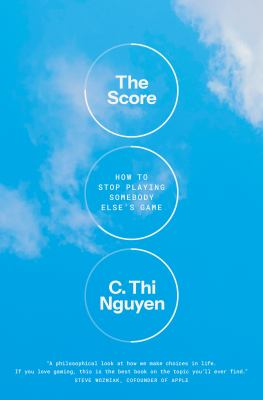
– C. Thi Nguyen, The Score (2026)

 brettworks
Leave a comment