
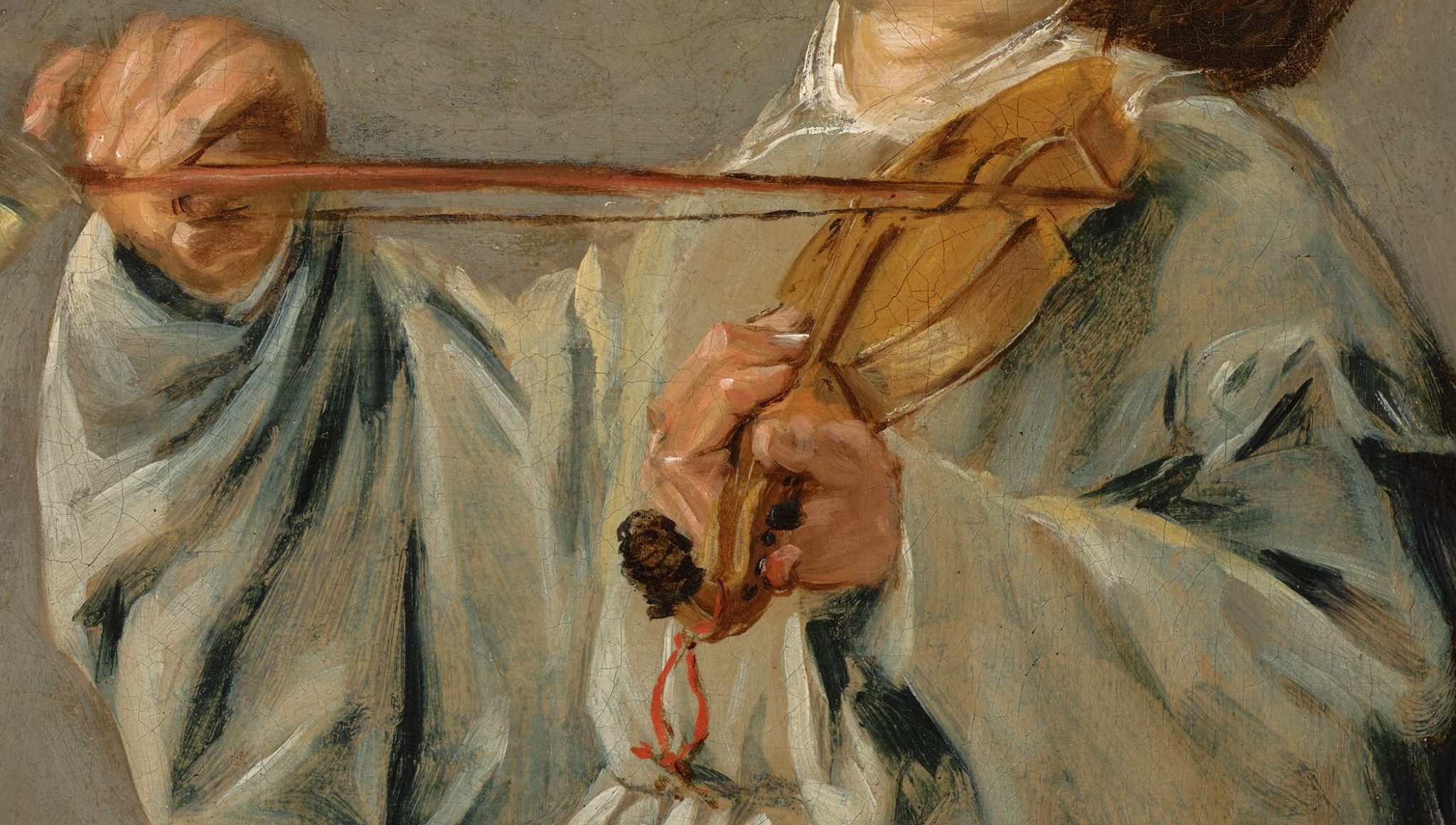
(Detail from Judith Leyster, Merry Company, c. 1629)
A friend of mine, who isn’t a musician, enjoys my piano music. So occasionally I’ll email him an mp3 of something I’ve done to get feedback. Music inspires him to ask thought-provoking questions. One day he texted,
Do you play music with your heart or your body?
Uhh, what do you mean?
Like, do you play piano differently than you play percussion?
Well, I think so. Improvising on piano feels like trying to find something, while playing percussion feels more like muscle memory–maybe it’s more athletic? I’m not sure. But playing any instrument feels like a body expression.
Maybe it’s the fact that my friend isn’t a musician that makes him an astute, unencumbered listener. And as with his question about how I play, the way he interprets music gets me thinking. For example, he understands which of the pieces I send him are promising, and which ones are meh. And he has a theory of how this is so.
Good music is like a story, he says. It starts somewhere, develops, and goes somewhere else. Sometimes it returns to where it started, sometimes not. Most importantly, the musician’s and composer’s thinking—the little indecisions, the moments of being lost, the considerations of what to do next—should be audible to the listener.
One day I sent him a piece that had some echo (delay) effects on the piano. Effects can create beguiling textures, but I’m wary of their impact on composing. In my case, I had played off of the effect, interacting with its rhythmic bounces and syncopations. What did my fiend think of it?
It droned a bit.
The echoes constrained what I could do rhythmically, and even harmonically: playing at the wrong tempo can clash with an effect’s pulse; and changing a chord too fast will cause its notes to overlap in dissonant ways. But more than this, effects are a poor substitute for kind of thinking my friend likes hearing in a solo. As he put it,
You’re kind of better when you’re still figuring things out.
These conversations remind me of the importance of musical gesture (a topic in Chapter 2 of my recent book). A gesture doesn’t have to be rehearsed, composed, or synced to an echo effect. It’s a response to the present sonic situation in which we find ourselves, as we’re figuring things out.

 brettworks
Leave a comment