
When I think about the word performance I often think about musicians, actors, dancers, even teachers putting on some kind of show. There’s a spectacle aspect to most performances though: they involve some degree of put on, some level of acting, some amount of fakeness. I say this even though I myself perform as a musician six days a week. But maybe performing isn’t the problem. Maybe the problem is focusing on its superficial aspects rather than the other, more substantial demands it makes our concentration, problem-solving, and attention?
Lately I’ve been thinking about some of the redeeming and compelling qualities of performance that have little to do with spectacle. One quality that interests me is how performance can bring out the best in us by urging us to surpass what we already know. In my experience, this quality often manifests itself through improvising in situations in which I have a rough idea of where I’m going but don’t know exactly how I’ll get there, or how I’ll get out of where I’ve gone. I compose this way, formulating a vague melodic game plan, along the lines of I’ll start here, then go higher, linger there for a while, then I’ll come back down. Flying without a net, basically, but just having this simple game plan is enormously helpful. I’ve used it enough to be convinced that its utility is due to it being simple enough to remember in real-time (I often play slowly and leave space, which helps), and also because it’s an open-ended constraint. I haven’t put any limits, for instance, on how long I’ll linger once I’ve moved to a higher register, or on how long it will take me to make my return descent. What does this have to do with performance? Performance is what brings the game plan to life and dares me to play with its constraints; I perform within the game plan by almost going beyond it.
I do something similar with writing. Here I don’t think in spatial terms exactly, but work along analogous lines. Let’s say I want to write about the idea of melodic game plans. Immediately I have three possible conceptual launch points: melody, games, and plans. How are melodies like games of planning? And off we go. It could be that a first paragraph will be all about melody, leaving aside games and plans for the moment. And maybe in the course of that paragraph the word moment stands out as a new connector. Maybe moment deserves its own paragraph to explain how melodies are moment connectors, architectonic plans in the form of pitched games? Once again, what does this have to do with performance? Two things. First, I’m trying find the performative potentials in my materials–which in this hypothetical example is a mere three words. Second, my playing around with my materials is both my performance and also a finding the direction in which my materials will ultimately take me. In other words, in improvising music and riffing on ideas my performing is a way of structuring, a way forward, a way of thinking through, a way of building outwards from a rough plan, one note or word at a time, to reveal some kind of path. Simply put, performance is at once a rising to an occasion and also its creation.
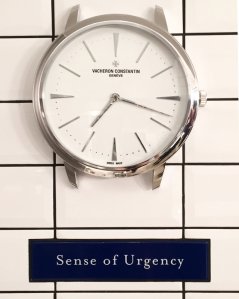
One final thing about performances is that they are deeply time bound. When a concert begins, the ensemble doesn’t make a false start and then say So Sorry! Ignore that. We’ll start over. The musicians just keep going despite how they began–no turning back now. The clock is ticking and the audience have come for an experience that can’t be turned back. These realities lend the proceedings a sense of urgency. Whether you’re performing, composing, or writing, the magical thing about a bona fide performance runs deeper than mere spectacle. A great performance feeds off of time in the most productive, imaginative way of which the performer is capable.


 brettworks
Leave a reply to Production Workflows: From Experimentation To Performance – brettworks Cancel reply