
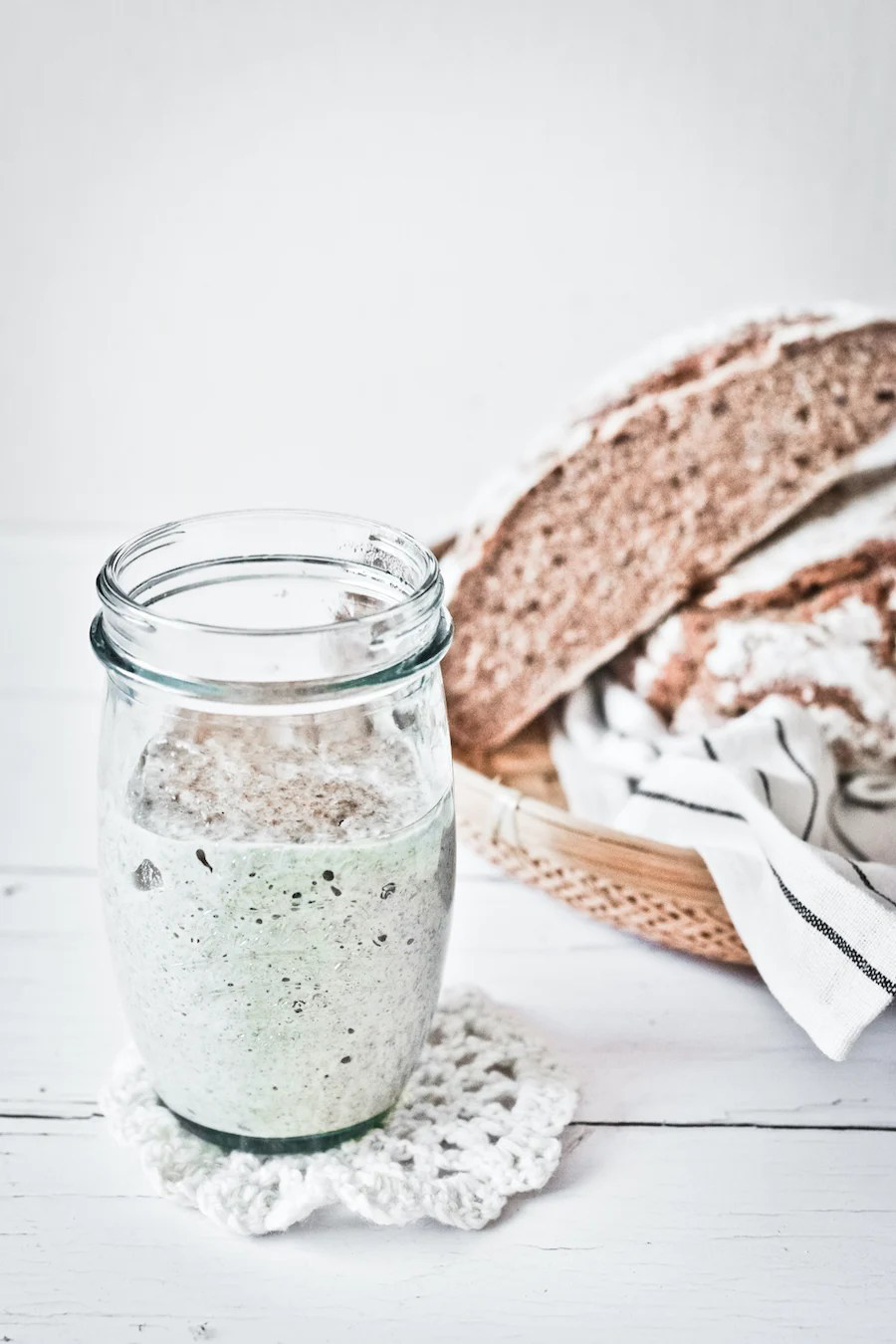
Serious bakers keep a jar of sourdough starter in their fridge at all times, feeding the live fermented culture (made of flour and water) daily so it’s ready to use in the next bread. The idea with a starter is to use a small portion of it to infuse the new dough to make it rise and add the sour funk of the old. Bakers will keep a starter going for years, or even decades, and herein lies the history aspect of the practice: keeping a starter maintains a living connection between past bakes and present ones. From cooking to musicking: I think a starter approach can be applied to producing music as a way of using previous work to seed the new. One can apply the approach in terms of sounds, techniques, and project design. Let’s take look.
The simplest starter approach is to revisit sounds you’ve used on past projects. When you revisit a sound you remember what made it compelling in the first place: you re-live that ah-ha! moment which triggers ideas as to how to alter the sound further. As with a sourdough starter, you throw away a bit of the old and add some new material to revitalize what remains and make variations on it. The producer James Blake explains his process for making a “loop library” of drum patterns that he later revisits, re-samples, and re-uses:
“I’ve got a sample library of drums that are my versions of other drums–ways that I’ve EQ’d them or mixed them–re-sampled into a sample pack. Sounds that I’d already created somehow, created a sample pack out of that. So it’s like echoes of drum kits that you might find in sample packs, but they’ve gone through my filter. I made a loop library…and now I re-sample those loops and turn them into other stuff.”
In my own work, I like to change a previously used sound by removing something from it: muting an oscillator or an effect, for example. This helps me understand what was going on under the sound’s hood, and clarifies my listening. In general, I strip the material down before building it back up again. (Or sometimes just leave it stripped down.)
A second starter approach is to revisit techniques you’ve already used. The most powerful compositional techniques tend to be the ones that have stood the test of time and consistently produce results. An example of such a technique is the prolation canon. I use them to extend chords and melodies so they unfold at different speeds. The technique is ancient, but in a DAW you can spin variations on it by experimenting with juxtapositions of various sequence lengths, each with a different rhythmic relationship to the original. You can have a fast line, a second line moving 1/3rd the speed, and a third moving 1/2 the speed, for instance. Such a combination of speeds–imagine three differently-sized gears all turning at the same time–generates unusual counterpoint while maintaining a connection to the original musical material.
Effects processing is another technique for developing your music. I save many effects racks which I revisit later to make variations on, and then re-save those variations. Each time I return to a rack I look at what I was trying to do the first time and then play with that. There’s no downside to this practice, and the upside is fiddling your way into new sounds.
A third starter approach is to revisit your past projects in their entirety. No matter what genre you work in, over time you’ll build up a repertoire that (hopefully) reflects your interests. Your repertoire is like a map of all your compositional thinking, technical knowhow and shortcomings, and musical interests compressed into the tracks and soundworlds you were able to wrangle together at a moment in time. I’ll periodically re-listen to my older music and reassess what I was trying to do. I want to understand what the music wasn’t doing as well as it could have and what, if anything, it was succeeding at. One thing I’ve noticed is that improvised-based pieces are always the most surprising ones, probably because they reveal more in-the-moment thinking. These tracks, which I remember making quickly (i.e. in a single session) with whatever sounds were at hand, are my favorites. In sum, if there are lessons about sounds, techniques, and project design in our past work, it’s worth understanding what they may be and exploring how can we bring them, like a sourdough starter, into the future.

 brettworks
Leave a comment