
“The hand carries the load of value through lived experience. And experience cannot be automated.”
“Few artists like to admit to painting by the numbers. Nobody wants to seem ordinary. The occasional visibility of artifice—portable, explainable, documented, transferable, automated—therefore tends to startle or repulse audiences acculturated into the privilege of exceptional human genius.”
“The hypothesis of distributed cognition holds that cognitive tasks don’t just happen in the mind. We think with our bodies, with tools, with texts, within environments, and with other people.”
“The so-called ‘neural’ networks producing ‘learning’ effects are mathematical models loosely approximating some aspect of biological brain activity. ‘Learning’ in that sense represents statistical analysis of datasets, large beyond human comprehension. The technique also excludes ordinary mechanisms usually associated with human learning, like play or the feeling of accomplishment.
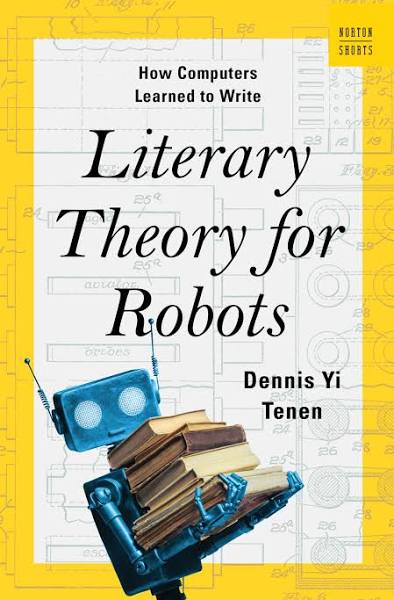
Dennis Yi Tenen, Literary Theory for Robots: How Computers Learned to Write

 brettworks
Leave a comment