
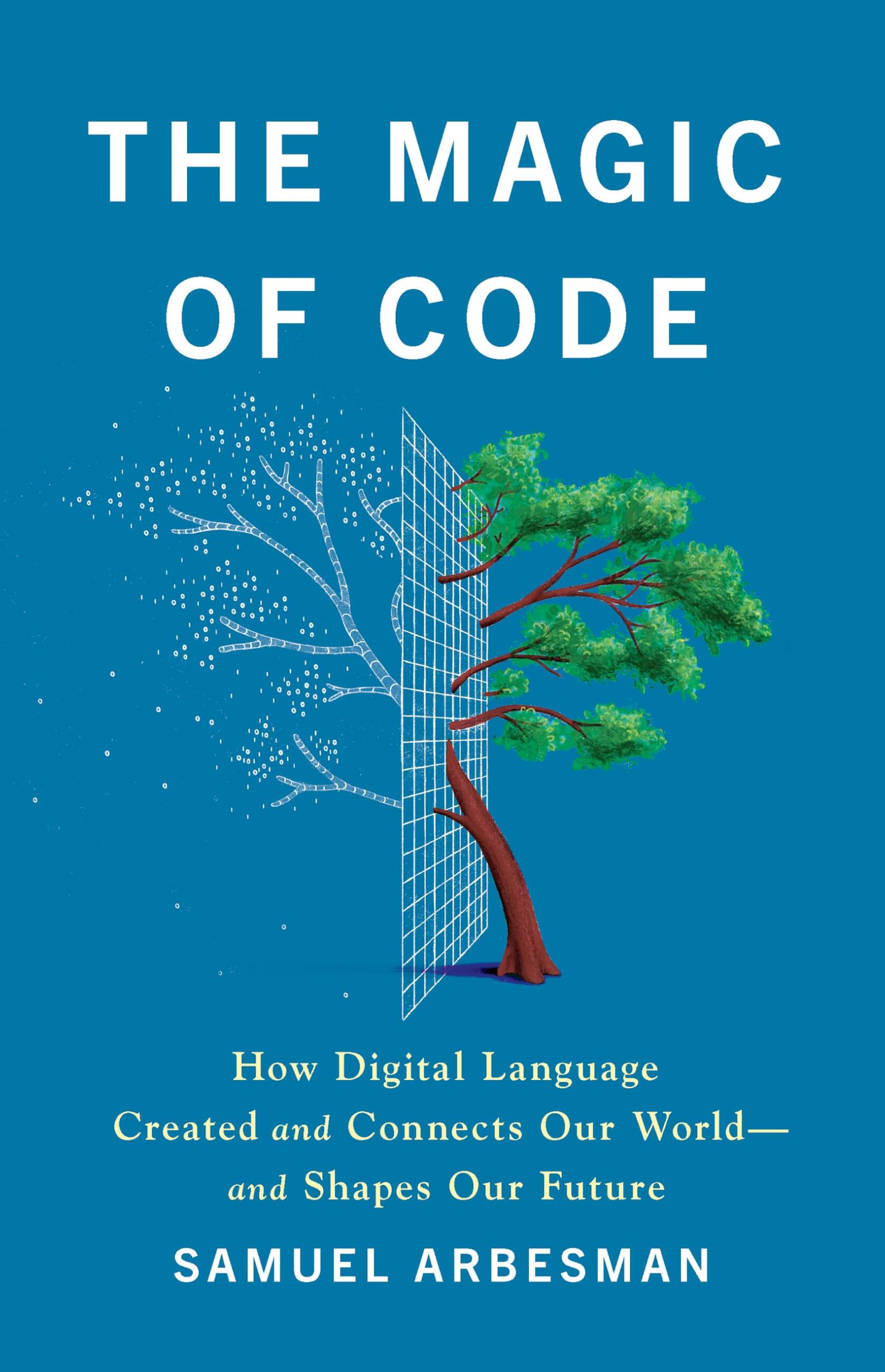
“Enchantment and the belief in nonsense never disappeared in our modern scientific age. Similarly, the worlds of enchantment—or really, wonder—and disenchantment have existed alongside each other in the realm of computing. The utilitarian road of staid and corporate coding has always run beside the path walked by those delighted by the marvels of these machines, those who have played with computers at a more human scale. In fact, a lot of the human-scale computational wonder might only be possible because it is built on top of hardware and software created using a utilitarian stance. There is a bit of a symbiosis here between these two approaches” (16).
“Randomness is found deep within such matters as code making and code breaking, scientific experimental design, simulation of the real and messy world, and simply the many, many ways in which something might deviate from random chance. You can only know how unexpected something is if you know the true shape of randomness” (57).
“Do you want a powerful system that can generate text, or code, or images? Then you must place a large corpus of humanity’s creations upon its altar. These systems are greedy demons, insatiably consuming vast quantities of data. And in their automated output, you can see hints of what has been sacrificed: Getty watermarks on AI images, stylistic mimicry of artists, slightly modified copyrighted computer code generated by a powerful auto-complete. The creative work of artists, photographers, and programmers has clearly been devoured to generate these outputs” (58-59).
“AI requires a huge number of examples of cats to extract
‘catness,’ or Wikipedias worth of writing to predict the next hundred words of a chunk of text. In this way, at least right now, these systems are different from people, who learn much more rapidly and without nearly as many examples” (59).
“We are always living within a whole cluster of technological time spans, but too often we are completely oblivious and almost never think about anticipating their ends” (252).
“Even though we intuitively know that technology is always changing, we still think of individual skills necessitated by categories of technologies as long-lasting or ever-present” (252).
“We are in a perpetual state of technological prelapsarianism, forever unable to recognize that the technologies around us—and the society they describe and create—are in a constant state of future obsolescence” (253).
“All that we create has an expiration date” (255).
– Samuel Arbesman, The Magic of Code (2025)

 brettworks
Leave a comment