
“Do we lose that sense of the greater purpose of music – once it is set inside the flat, if relentless and very helpful, music services – as this other language, this alien presence taking on the unknown, defending us against all kinds of threats, danger and tension? Will this near-monstrous availability of music, the over-engineered tethering of everything into one place, lead to stronger, more innovative music, and more awareness of its deeper powers, or weaken and break it up into mere patterns of fun, a bland, near-perfunctory amenity increasingly adrift from any rooted, evolving artistic, cultural or social context, except when the idea of ‘rebellion’, or resistance – the transmission of cool – is merely part of an inherited game plan, an established formula?” (25).
“Art is ultimately what helps us deal with the turbulent, sometimes toxic force of change; it explains it, predicts it, contains it, is a necessary antidote to the rampaging forces of those claiming power, dictating morals, reducing freedom, setting us apart and shredding truth and beauty. It is the most vital corrective alternative to the self-generating entrepreneurial energy that generally exploits technological change and natural disaster, mostly to make money and take control of our interests. It is a mysterious, at best uncontrollable form of opposition to those who use the developments in technology to herd us into obedient, pacified communities whose sole function is ultimately to consume and download and disappear into a kind of censored, gated territory of lifestyle ease, merciless entertainment and moral indifference, until there’s nothing left of what once seemed inviolably human. At this point, in the middle of the sort of changes that will either end us or profoundly transform us, even replace us, there is an extraordinary, fast-evolving need for music, as an unclassifiable symbol of otherness and artistic endeavor, as a method of communicating thought about the vastness of the cosmos, the glory of love, the wonder of existence, the nature of our minds, the dreams of humans, which music is a mirror of, a maker of, beyond words and logic, and temporary, distracting societal pressure and overstimulating fashionable trends” (26).
“Perhaps, via streaming, music has only just begun. The streaming system is a protective vessel carrying music into the future, beyond whatever terribly unprecedented and life-threatening problems suddenly appear, where it will reconfigure itself in ways that will make the current streaming technology seem primitive. As always, to keep us sane, smart and positive in the middle of trying, relentlessly chaotic times where considered thought is taking a battering, music is going somewhere else, becoming something else, using whatever technology is available to fill our minds with the efforts, ingenuity and dreams of other hopeful minds. Even inside the machine, as the world falters, up in that mysterious cloud, pressed into a new kind of service, music keeps going. It keeps going for as long as we need it, not even stopping when we stop” (28).
“The acceleration that happened in Jamaican music between the early 1960s and the early 1970s, as it zigzagged from ska and rock-steady via toasting and reggae to futuristic dub, was an aspect of a nation rapidly discovering a new identity once it had been released from the British colonial presence. The pent-up musical inventions and varieties of showmanship tumbling on top of each other as liberated locals made up for lost time, a version of how the German electronic musicians were using music, imagination, intoxicants, machines and recording studios to create a new national sound that repaired considerable psychic, cultural and environmental damage. Positive new myths emerged out of a period of ruined, ruinous myths” (256).
“recording studio as a musical instrument/dream machine/idea processor” (256).
“The tape delays allow him to react to his own thoughts, to echo his own instinct, and get deeper into his feelings” (260).
“Pop was all about the results and the feedback. The experimental side was interested in process more than the actual result – the results just happened and there was often very little control over them, and very little feedback. Take Steve Reich. He was a very important composer for me with his early tape pieces and his way of having musicians play a piece each at different speeds so that they slipped out of synch with each other. But then when he comes to record a piece of his like, say, Drumming, he uses orchestral drums stiffly played and badly recorded. He’s learned absolutely nothing from the history of recorded music. Why not look at what the pop world is doing with recording, which is making incredible sounds with great musicians who really feel what they play? It’s because in Reich’s world there was no real feedback. What was interesting to them in that world was merely the diagram of the piece, the music merely existed as an indicator of a type of process. I can see the point of it in one way, that you just want to show the skeleton, you don’t want a lot of flesh around it, you just want to show how you did what you did. As a listener who grew up listening to pop music, I am interested in results. Pop is totally results-oriented and there is a very strong feedback loop. Did it work? No. We’ll do it differently then. Did it sell? No. We’ll do it differently then. So I wanted to bring the two sides together. I liked the processes and systems in the experimental world and the attitude to effect that there was in the pop; I wanted the ideas to be seductive but also the results” (Brian Eno, 513).
“to find your gift and then give it away” (596).
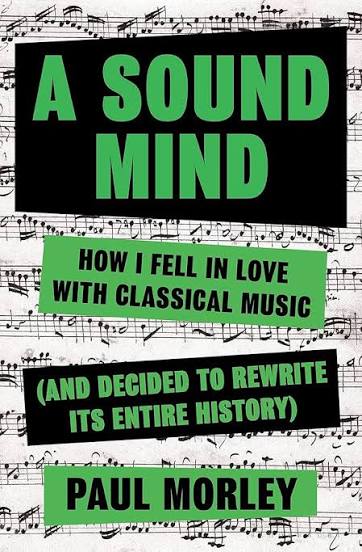
Paul Morley, A Sound Mind:
How I Fell in Love with Classical Music (and Decided to Rewrite Its Entire History) (2020)


Leave a Reply