
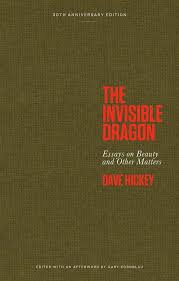
“If images don’t do anything in this culture, if they haven’t done anything, then why are we sitting here in the twilight of the twentieth century talking about them? And if they only do things after we have talked about them, then they aren’t doing things, we are. Therefore, if our criticism aspires to anything beyond soft science, the efficacy of images must be the cause of criticism and not its consequence–the subject of criticism and not its object.”
“As Baudelaire says, ‘the beautiful is always strange,’ by which he means, of course, that it is always strangely familiar and vaguely surprising.”
[On the art of Ed Ruscha] “…seeking out, amid the penultimate chaos of macrocosmic entropy, myriad instances of microcosmic information, charting out the frail filigree of interstices and tangential resonances between them, creating in the process a redeeming vision of the discontinuous connectedness of contemporary culture.”
“I am perpetually concerned with and mystified by the ways in which art creates the art world and by the ability of specific works to create specific art worlds within it. As a consequence, I have begun to wonder whether works that create no constituencies–that no one unrelated to the artist or the sponsoring institution cares about–should be considered art at all.”
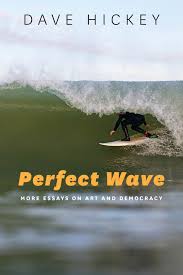
“Curves, [architect Morris Lapidus] said, signify leisure, because a curve is the longest, most beautiful distance between two points and we’re not in a hurry. Curves are sexy, because human beings are curved, and the curvier, the sexier. Curves stand for change, because curves are how we measure change and express it. Curves signify flexibility and adaptability to nature, because nature isn’t rectangular.”
“I have always taken the overthrowing and reforming of cultural institutions to be the artist’s and the critic’s first secular task.”
Dave Hickey, The Invisible Dragon (1993/2023), Perfect Wave (2017)

 brettworks
Leave a comment