
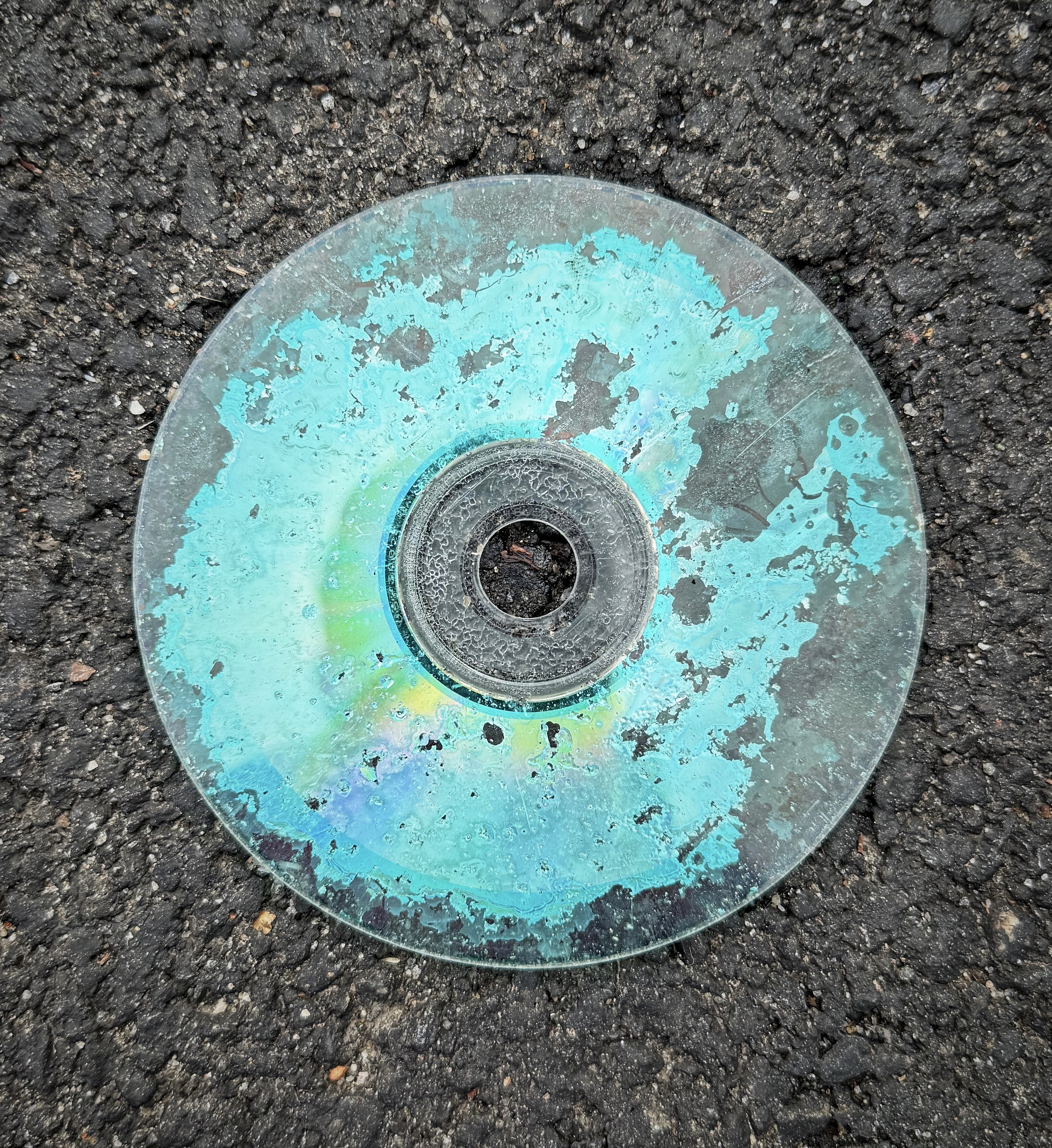
In Times Square the guys hawking their hip hop CDs and the guys hawking their fake Buddhist bracelets are of a piece, both unaware that art, as a commodity, has no value. But the hawkers know something about symbolic value and that the way of imbuing their wares with magic is through their person. The musician explains to the clueless tourist, Buy my CD for a dollar and I’ll sign it for you. The faux monk smiles and attempts to put the bracelet around your wrist. Both guys are making a move on your attention, authorized by the identity they represent–“artist”, “monk”–and the aura it embodies.
With the arrival of the streaming era twenty years ago, music lost its body. And so, like the CD or bracelet foisted upon us, it has no value as a commodity. Music has no object to sell, just an audio experience. For the consumer, ten dollars a month buys access to an ocean of commercial and independent music. As I wrote in 2015, music is “now a portable soundtrack following me wherever I go but without a body of its own.” Streamed music also flattens distinctions between different kinds of music, as if all music is equally valuable because it’s equally evanescent and nothing matters more than anything else. For the musician making the music, recorded sound without a body is worth very little. While a few hundred or thousand weekly listens is exciting—They’re listening to my music in Norway and Vietnam and the Netherlands!—it pays the equivalent of two burritos a month.
In the streaming era, musicians compensate for music’s lost body by hustling some of their authorial aura back into the world through social media-based self-promotion, interviews, YouTube, teaching, and touring (if they can afford such an expensive proposition). A musician friend of mine stays busy marketing his aura by recording videos at home. He has a following on Instagram, but in real life it’s hard to find him. For all I know he may be famous among his community of fans living within social media’s walled garden regulated by Likes, Subscribes, and Shares. Interestingly, he doesn’t release music on streaming platforms because streaming doesn’t pay. Instead he makes money by turning himself into a commodity for the small screen, making “content” in the form of YouTube videos, IG stories, tech endorsements, live streaming, and occasional group teaching. He’s popular within a niche of musicians, but the music he’s recorded doesn’t circulate. In fact, unless you’ve bought one of his limited run LPs, you can’t have his music. This mix of hyper-visibility and inaccessibility is interesting. My friend is practicing an upscale version of hawking CDs and bracelets in Times Square in that the value of his music depends on proximity to its maker. Perhaps the idea is to be a brand whose artistic value, like a Gucci handbag, is based upon high price and scarcity.
A defining quality of streaming is how it has separated music from both its makers and a physical format. On Spotify, an album is represented by a mere 1 by 1-inch cover photo (or an 8-second video “canvas”) and composer credits. As music streamers, we have no contact with the music’s maker, only her sounds. This lack of relationship flattens music to its audio identity: every recording—whether it’s Bach or Beyoncé—has to earn its listeners on its sonic merits, not the charisma of its maker. In theory, anyone’s music can reach hundreds of millions of listeners. But in practice, most tracks languish–a tree in a forest with no one around to hear its fall. Since artists and listeners are isolated from one another, Spotify bridges the gap with its own hawking moves in the form of playlists and algorithmic recommendations. These human- and AI-curated playlists shape what’s popular and who makes money. A track selected for a playlist is instantly in front of thousands, or even millions, of potential listeners. Case in point: a playlisted track of mine has 100x the daily listeners of everything else I’ve released. Playlists and the all-important total number of listens and monthly listeners metrics shape our perception of which music is worth our attention and which we can ignore. With the repetition of playlist-guided listening, music gets sorted into the noticed or the forgotten. It’s humbling to know that of the 11 million artists on Spotify, most of their music is never even listened to.
If there is an antidote to the streaming era it isn’t to not listen on streaming platforms, but rather to listen more closely to anything you find genuinely interesting. It’s the listener’s responsibility to suspend assumptions about recorded music and tune out biases, preconceived notions, and hawking promo hype. Even having lost its LP-, cassette-, and CD-based body, enchanting music can still speak on its own behalf. What are these sounds doing? is the key question. Whatever its format, music remains a singular experience that, ideally, doesn’t need to sing its own praises.


Leave a Reply