
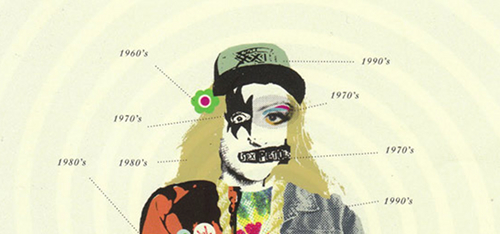
Recently I spun through the New York City FM pop radio dial and in the space of a few minutes heard a slew of old music from the past few decades, including The Animals’ version of “House Of The Rising Sun”, Brian Adam’s “Run To You”, Prince’s “Raspberry Beret”, AC-DC’s “Back In Black”, and Michael Jackson’s “Billy Jean” among many other songs.
Depending on where I stopped the dial, you could be forgiven for thinking it was still the 1960s, 70s, 80s or 90s. This, of course, is how radio works: playing us the hits of today sure, but especially whacking us with the hits of yesterday (which today will itself become as soon as tomorrow comes around). In 2011, evidently there’s still strong interest in old songs–songs that bring us back to earlier times in our listening lives. Nostalgia kicks in when we hear these old songs–for me it’s 1980s music when things went all MIDI-sequenced and synth-electronic–because not only does the music trigger vague (and sometimes specific) memories, but it also beckons us to re-listen to it. So if you’re like me, you crank up the volume and have another close go-around to hear what you always noticed or maybe missed back in the day. For the record, let me just tell you that MJ’s “Billy Jean” sounds as great as ever, with its silken, deceptively simple 4/4 beat drummed by Ndugu Chancler, its pulsating bass (is that a synth or a real bass? I still can’t tell), and that horn section panned way over to the right side just so. Produced by Quincy Jones, the song is pristinely recorded and meticulously arranged right down to its smallest sounds.
So old music that refuses to leave our midst thanks to continuous radio airplay triggers one kind of nostalgia. Another kind of revisiting our aural past is evident in contemporary bands and composers–especially prominent during the last decade it seems–who deliberately resuscitate and imitate bygone musical sounds and styles. There are so many examples of this it’s hard to know where to start, but this kind of “retro” fetishizing is all over the place. For instance, bands will go to great lengths to use vintage sound recording equipment to get an “old” sound; and they’ll use digital tools to process their sound to the same effect. Artists also work strictly within the sonic conventions of a musical period from a bygone time. For example, La Roux’s 1980s synth pop sound:
or UK Electronic musicians Boards Of Canada use of wobbly tape and gauzy keyboard timbres to evoke 1970s Canada Film Board documentaries:
or the late Amy Winehouse’s homage to American Motown music:
The mash-up music of artists such as Girl Talk might also be relevant here, as it mixes and matches snippets of popular songs from the past to trigger our nostalgia of recognition (“Hey, I know that song!”):
Or even TV commercials that revisit an earlier musical era like this Geico ad that traffics in 1980s synth, drum machine and electric guitar sounds:
Finally, classical music composers make use of old sounds too. Consider the work of the master Estonian composer Arvo Part, much of whose music has a late-medieval polyphony choral sound:
In his exceptionally thoughtful and timely book Retromania (Faber & Faber 2011), Simon Reynolds has written an exhaustive account that chronicles the rise of retro in contemporary popular culture since the 1960s. The book approaches so many important big questions, including: Why do fetishize our artistic past so much? What does this say about our cultural moment and are there consequences for our love of all things retro? And what, if anything, constitutes genuinely new music today?
Among Reynolds’ many piercing observations is the notion that old musical styles have become empty signifiers: “What style now signified was style itself” (305), “a ghostly signifier detached from any real-world referents” (307). In other words, while we make use of old sounds and styles they don’t really mean much anymore, nor do they have genuine power to shock and effect change. Perhaps part of the problem here is how easy it is for anyone to instantly access music’s past through that collective creative commons–indeed that “whole field of cultural practice” (59)–otherwise known as YouTube. In the Internet-connected world where one can obsess over and study the obscure details of many musical eras, creativity, says Reynolds, is reduced to “taste games” (141) played by artists negotiating idiosyncratic pathways through “a grid-space of influences and sources, striving frenetically to locate exit routes to the beyond” (427).
The problem, says the author, is that our love of retro in music is in fact evidence of “a kind of cultural recession” (422), a situation in which our love of recycling old artistic styles “became structural features of the music scene, substituting novelty (difference from what immediately preceded) for genuine innovation” (408). And while there are noteworthy examples of artists such as say, Vampire Weekend who have managed to forge productive paths through musical eras and styles using a well-honed “meta-critical sensibility” (415), the question remains: Will we ever again hear something genuinely and startlingly new as the styles of rock, punk, hip hop, or minimalism once were in their day? Will we? Reynolds remains optimistic that something big and change-inducing may be just around the corner, but doesn’t pretend to have final answers.
It’s hard not to read a book as comprehensive as this one in its scope (Reynolds also talks extensively about fashion and art in order to situate music making as an embedded cultural practice) without thinking about whether or not the retro trend in popular culture today is the inevitable result of our being swamped in the flood of information that is our own recorded history of production and consumption. Where are the new musical styles that critique and make sense of our historical moment? Are they already upon us? And if so, would we recognize these sounds when they sounded?


 brettworks
Leave a reply to Notes On Production Clichés – brettworks Cancel reply