
“artifacts of chance” (39).
“Given complete freedom, we tend to default to simple solutions, not because they are good, but because they are familiar” (47).
“Because we are cognitive misers, breakthrough creativity happens when the easy and intuitive path is blocked—by choice or by force” (48).
“Constraints push the brain beyond its default tendencies, forcing it to engage in deeper problem-solving. Total freedom, then, is the enemy of creativity, and constraint its companion” (49).
“That’s the thing about constraints that spur creativity: They shut down many possibilities, but stimulate more varied and novel exploration of those that remain” (58).
“When it comes to stimulating creativity, prescribing both the end goal and the precise process is limiting in the wrong kind of way” (65).
“The form itself is the engine of creativity” (70).
“The Cubists weren’t merely painting what a viewer sees but the many angles that the brain simultaneously knows” (75).
“Darwin’s case highlights the reality about breakthroughs. They are evolutionary, not revolutionary, and they always come from somewhere. They come from specific ideas that are all around, in the air of a time, so to
speak. Because they are in the air, multiple people can make the same breakthrough at once. As professor of neuroscience and psychology Robert Weisberg has written: ‘The creative process is based on inside-the-box thinking….We use old ideas in creating new ones.’ In the 1970s, science historian James Burke created and hosted a hit BBC television series titled Connections. In it, he demonstrated what he called the ‘jigsaw of invention,’ the notion that world-changing ideas arise when someone looking to solve an obvious problem pulls together knowledge that already exists but is disconnected” (204).
“Haiku finds depth in the simple, and creativity in constraints that block the path of least resistance. True maximizing is impossible anyway, but in the bounds of three lines it is plain that you can’t even realistically try, so you have to satisfice and make do with what’s available. Haiku is small, so you can try easily and iterate quickly. It is in present tense, so it forces you to be in the moment, rather than ‘forever elsewhere,’ as MIT professor Sherry Turkle has described a boundless life on screens” (233).
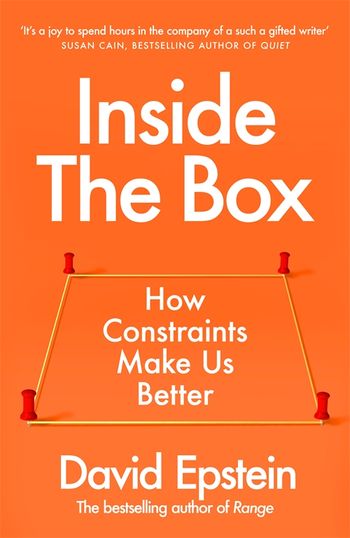
David Epstein, Inside the Box (2026)


Leave a Reply