
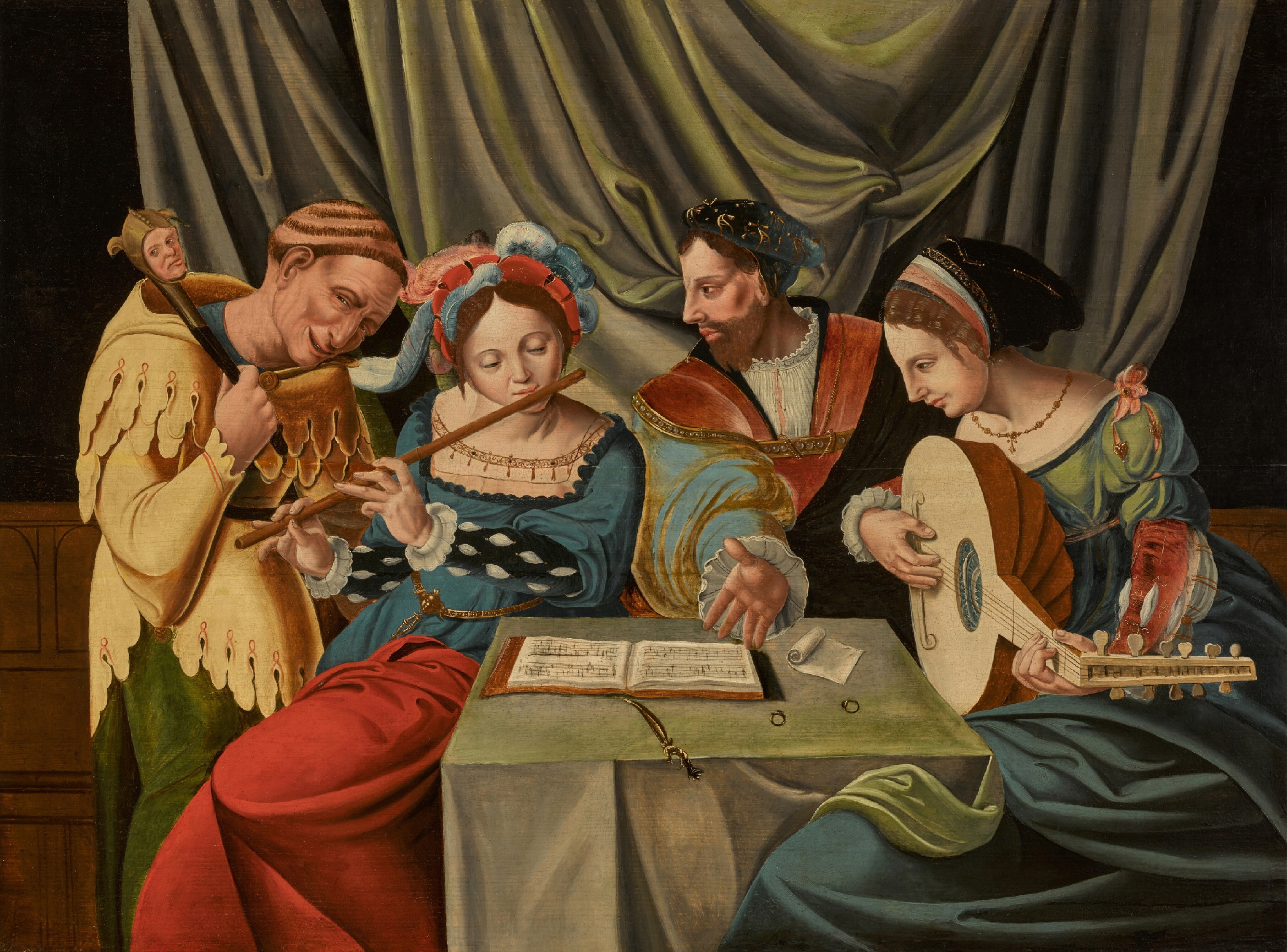
Master of the Female Half-Lengths, A concert with a singer, flautist, lutenist and a jester (c. 1520s-1530s)
“The inexhaustibly precise is always simple, always without resistance and easily grasped, but always has more to it than what first meets the eye.”
Karl Ove Knausgård, In the Land of the Cyclops (2021)
Unless you’re an improviser who records everything in one take, composing is a slow process that takes days, weeks, months, and sometimes years. One might improvise an initial part, create or happen upon a sound, or figure out a melody quickly. I’ll often sketch an entire piece in one session, then derive other parts from the idea (or play along to it), working fast in the belief that a single gesture is a musician’s best chance to capture a fleeting feeling in sound.
But once I have a sketch, it still needs editing. The first editing step is setting the music aside for a while in order to come back to it later with fresh ears. Time away is important for forgetting some of the context and excitement of the music’s making. When you return, you’re listening for a specific quality: whether the music makes you feel anything beyond itself. You’re trying to discern what the music evokes, what it’s hinting at, what it’s gesturing toward. It’s important, though, not to be a snob about how the music is working, because it’s often the simpler ideas that sing best. I might notice, for example, that the idea is just these four chords, yet something about their sound or their overlapping structure reminds me of a place, or even better, puts me in a state where attention blends with reverie, where enchantment resonates through memory. Maybe such perceptions are all a part of music’s negative space, or what musicians call the space between the notes.
A piece that passes this initial assessment moves on to a second editing step, finessing. The primary concern here is not to destroy whatever made the initial gesture special. A general rule of thumb: don’t add anything to what’s already there. I’m always tempted to use what I know now—which is more than what I knew last year!—to re-do or reframe or swap out this sound for that one, and so on. But respect the past: what you did last July on a Monday afternoon when you were reacting to whatever you were feeling then—that is worth keeping intact.
Now we listen to the music on repeat, with an ear not to revise exactly, but to nudge what is into a more impactful version of itself. There’s no recipe for how to do this, but as I’ve discussed in Finishing Music, broad, gentle gestures work well: a little volume boost or cut, a more sensible fade out, contouring the filter cutoff. Another rule of thumb: if you have to change something, change the least amount possible. Such edits don’t have to take long, but they often do. Editing tends to be a slow process because it requires listening to the music on repeat, noticing what stands out on each pass, wondering whether that’s serving the overall sound, and if not, improvising an adjustment (for example, reducing the bass to the point where it’s felt more than heard). Editing is also slow because it happens in real time: you can’t compress a piece of music or speed it up 1.5 times (like a podcast), and you can’t understand a cadence at the 2-minute mark without listening first to the preceding two minutes. But stick with it. Each time the music plays it accumulates traces of your edits and therefore traces of your experience attending to it. The music is modeling something in your life, it’s changing you, and eventually it may find the shape you need it to have.


Leave a Reply